Platelet-Rich Plasma (PRP) therapy is a non-surgical treatment that uses your own concentrated growth factors to stimulate dormant hair follicles. It
effectively reduces hair shedding, increases hair-shaft diameter, and improves overall density for those experiencing early-to-moderate thinning.
The Process
The PRP process is a quick, minimally invasive outpatient procedure typically taking less than an hour:
- Blood Draw: A small amount of your blood is drawn, similar to a standard lab test.
- Centrifugation: The blood is placed in a centrifuge to separate the platelet-rich plasma from other blood components.
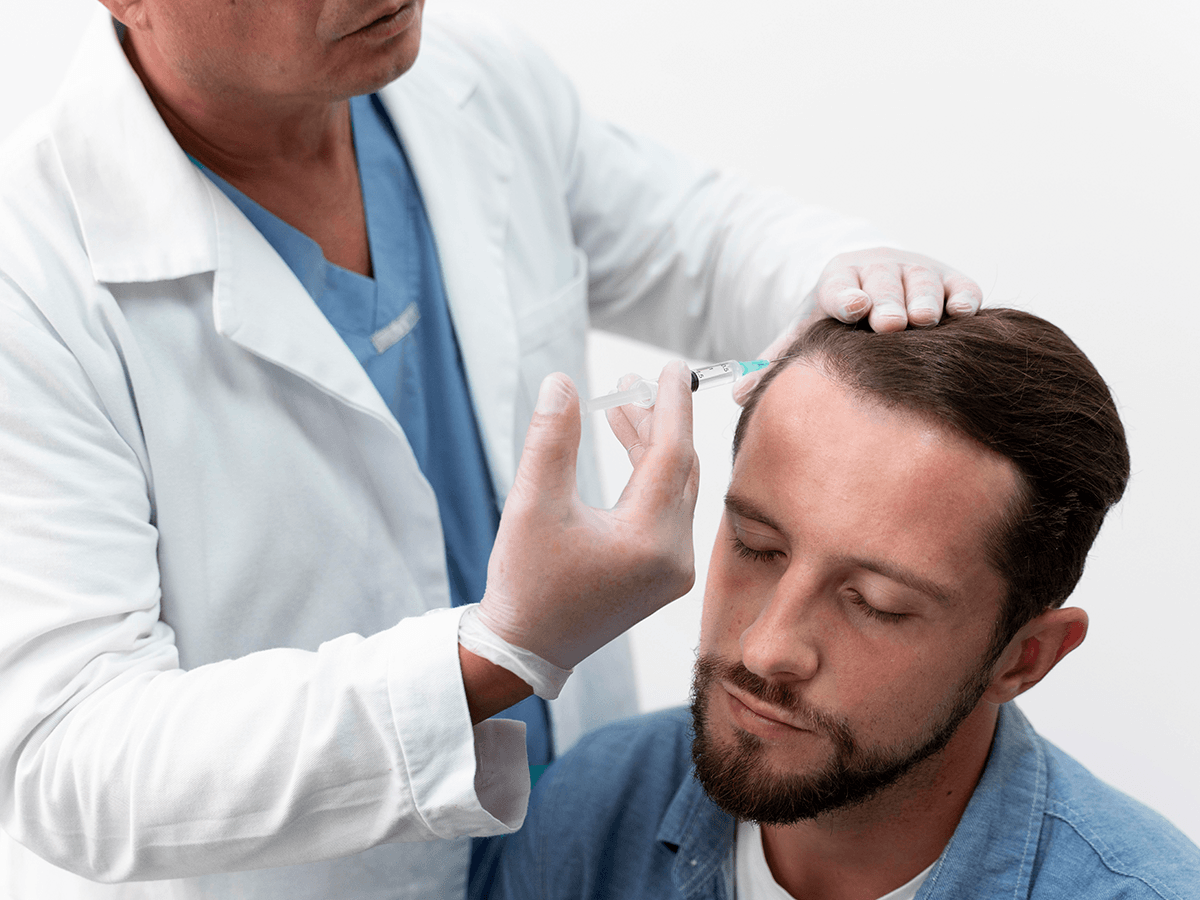
- Micro-injections: The concentrated plasma, which is packed with growth factors, is carefully injected into the targeted areas of the scalp.
- Natural Approach: Utilizes your body’s own natural healing mechanisms rather than relying on pharmaceutical drugs or artificial implants.
- Minimal Downtime: You can resume most normal daily activities immediately following the procedure.
- Versatility: Highly effective for both male and female pattern baldness (androgenetic alopecia), and is often used to support hair growth post-transplant.
Results are not immediate, as the therapy relies on natural hair growth cycles:
- Months 1–2: Shedding often decreases, signaling that the follicles are stabilizing.
- Months 3–6: Noticeable improvements in hair density, texture, and visible thickness typically emerge.
- The Routine: An initial series of 3 to 4 treatments (spaced 4 to 6 weeks apart) is typically required to see optimal results.
- Maintenance: Because PRP manages rather than cures hair loss, ongoing maintenance sessions every 4 to 6 months are usually necessary to sustain your results.